Table of Contents
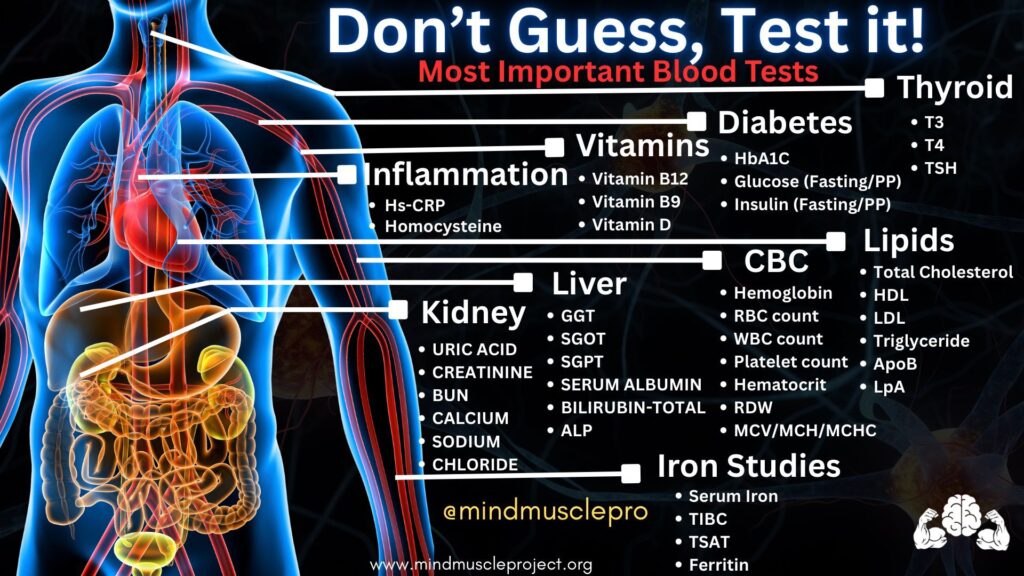
If you’re looking to stay on top of your metabolic and overall health, here’s a comprehensive checklist of blood tests you should consider — especially if you’re concerned about diabetes, inflammation, nutrient deficiencies, or general wellness.
🧪 Diabetes Screening #
- HbA1C
- Fasting Glucose
- Fasting Insulin
- Postprandial (PP) Glucose
- Postprandial (PP) Insulin
🩸 Complete Blood Count (CBC) #
- Hemoglobin
- RBC Count
- WBC Count
- Platelet Count
- Hematocrit
- RDW
- MCV
- MCH
- MCHC
🧬 Lipid Profile #
- Total Cholesterol
- HDL (Good Cholesterol)
- LDL (Bad Cholesterol)
- Triglycerides
- ApoB (Atherogenic particle count)
- Lp(a) (Genetic marker for heart risk)
🔩 Iron Studies #
- Serum Iron
- TIBC (Total Iron Binding Capacity)
- TSAT (Transferrin Saturation)
- Ferritin
🦋 Thyroid Profile #
- T3
- T4
- TSH
🔥 Inflammation Markers #
- Hs-CRP (High Sensitivity C-Reactive Protein)
- Homocysteine
🍀 Vitamins #
- Vitamin B12
- Vitamin D
- Vitamin B9 (Folate)
🍷 Liver Function Tests (LFT) #
- SGOT (AST)
- SGPT (ALT)
- GGT
- Serum Albumin
- Bilirubin
- ALP
🚰 Kidney Function Tests (KFT) #
- Creatinine
- Uric Acid
- BUN (Blood Urea Nitrogen)
- Calcium
- Sodium
- Chloride
🗓️ How Often Should You Get These Tests? #
⚠️ You don’t need to do all of these tests every single time. Frequency depends on your health status, history, and doctor’s advice — but here are some general guidelines:
✅ Every 6 Months (For Healthy Individuals) #
- HbA1C
- Fasting Insulin
- Fasting Glucose
- Postprandial Glucose
- Lipid Profile
- Vitamin B12, B9, D
- Iron Studies (Women)
✅ Once a Year #
- CBC
- Liver & Kidney Function
- Thyroid Profile
- Hs-CRP
- Homocysteine
- Iron Studies (Men)
- Postprandial Insulin
✅ Less Frequent Tests #
- ApoB – Once every 2–3 years
- Lp(a) – Once in a lifetime (genetically determined)
Takeaway: Smart health monitoring isn’t about over-testing. It’s about the right tests at the right time — tailored to your age, goals, and risk profile.